Product Selection
Characteristics of materials
1) The viscosity of the material. The viscosity of the material changes with its moisture content, which can cause the material to agglomerate into blocks and adhere to the cylinder wall. After drying, it is easy to adhere to the dust collector and pipe wall. Pneumatic vibration and crushing devices can be used.
2) The allowable temperature of the material. The allowable temperature is the highest temperature that a material can withstand. Exceeding this temperature will cause changes in material potency, decomposition damage, or discoloration.
3) The bulk density of a material is the mass of the material per unit volume, which is called the bulk density. Because the material is a mixture of dry and wet materials, dry materials are often in the form of granules, powders, or solid blocks, and the gaps between the particles of dry materials vary depending on the wet content of the material. The bulk density of raw wet materials and materials during the drying process varies greatly, and attention should be paid when selecting a dryer.
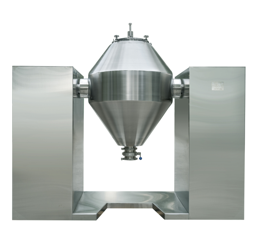
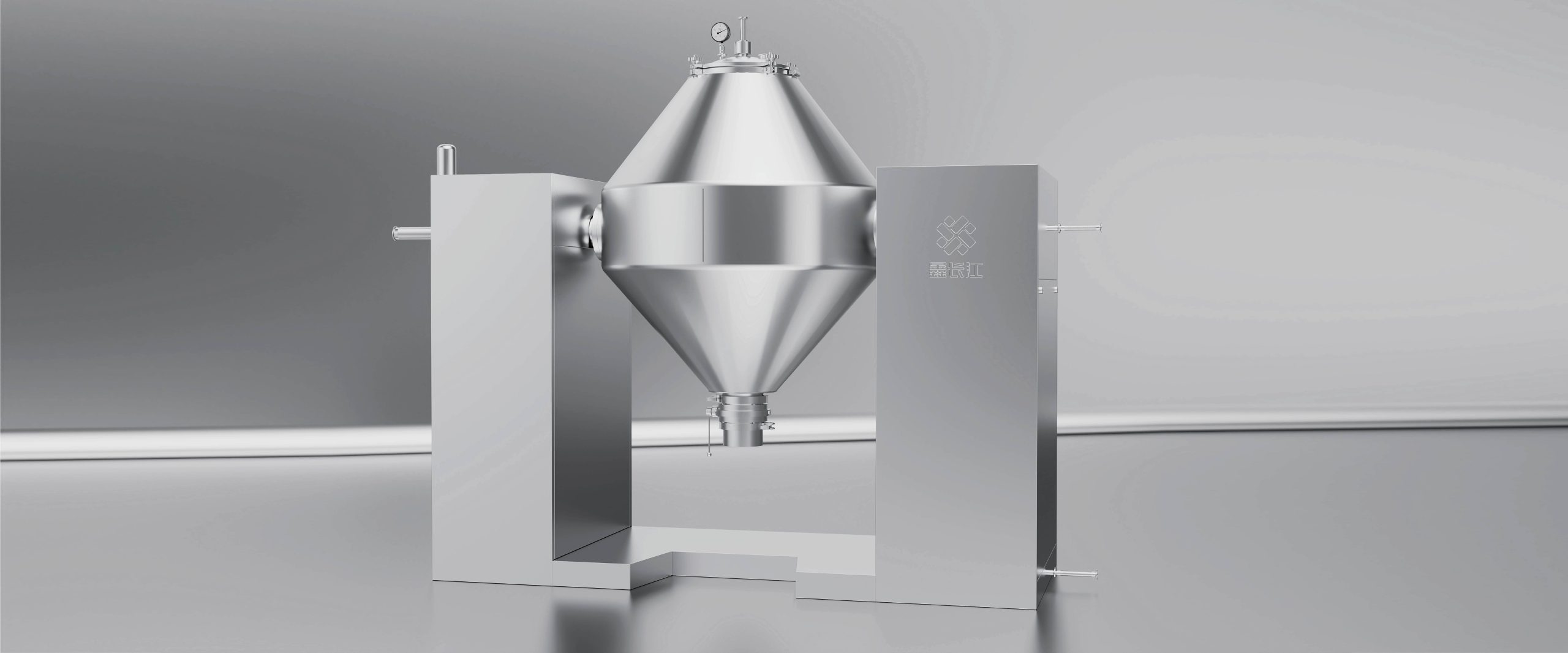
4) When stacking granular or powdery materials at a sliding angle, when the angle between the inclined surface and the bottom surface of the material pile increases to a certain angle, the phenomenon of lateral materials sliding downward will occur. The angle between the slope where the material slides and the bottom surface is called the slip angle of the material. The slip angle is related to material composition, moisture content, particle size, and viscosity. When choosing a double-cone dryer, you can refer to the slip angle of the material and choose the angle size of the cone.
Working vacuum degree
High vacuum degree, low moisture vaporization temperature in the material, and fast drying speed. However, the high vacuum degree leads to an increase in the cost of the extraction system, and the price of dried materials increases, which is not economically cost-effective.
Working principle:
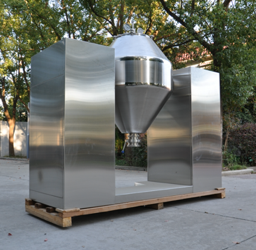
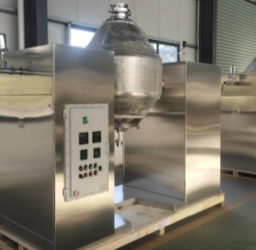
1. Firstly, a heat source should be injected into the interlayer, which can be hot water, steam, heat transfer oil, jacket, etc. With the heat source, the heat can be transferred to the materials that need to be dried inside the double cone;
2. Next, through the rotation of the tank body, the materials are continuously mixed to achieve drying;
3. This equipment is equipped with a vacuum pump that can adjust the material to a vacuum state, thereby evaporating the moisture of the material itself and discharging it;
Repair and Maintenance
Regularly check whether the insulation and grounding of electrical circuits are normal, and whether all connections are firm and free from looseness.
The oil level in the gearbox should be kept on the oil level line, and high-quality oil should be kept clean. If there is too much powder mixed in or too much turbidity in the oil, it should be replaced with new oil promptly.
After running for 80–100 hours, thoroughly inspect and tighten all fastening components of the machine.
Regularly detect motor noise and replace motor bearings if there are any abnormalities.
Check the wear of the belt and replace it promptly if it is severe.
After equipment maintenance, it is necessary to check whether the no-load and load operation of the equipment meets technical requirements. After the equipment operates normally, the site and internal and external hygiene of the equipment should be cleaned.
After a special situation occurs, press the stop button and restart the machine after checking and troubleshooting.
Regularly inspect the seals at both ends and if excessive wear is found, replace them on time to prevent dust or oil leakage.
Transport
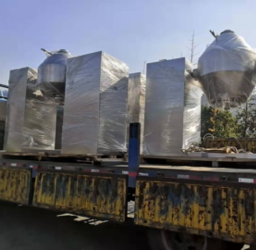
By shipping and ground transportation, and each machine is well packed before shipment to prevent damage in transit.