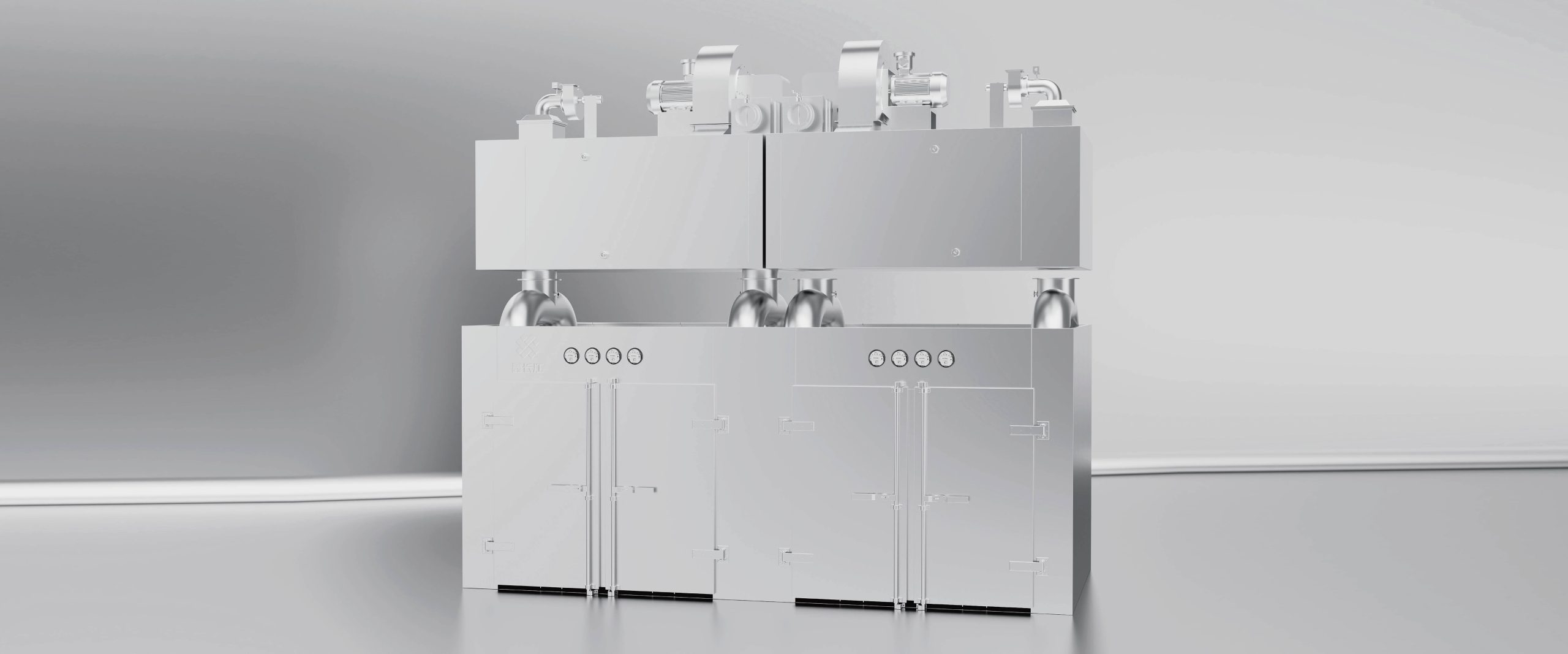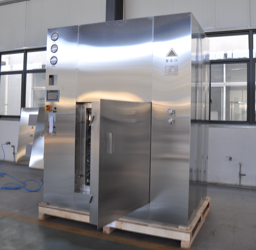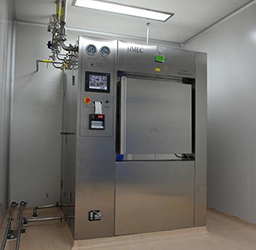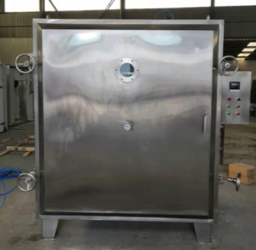
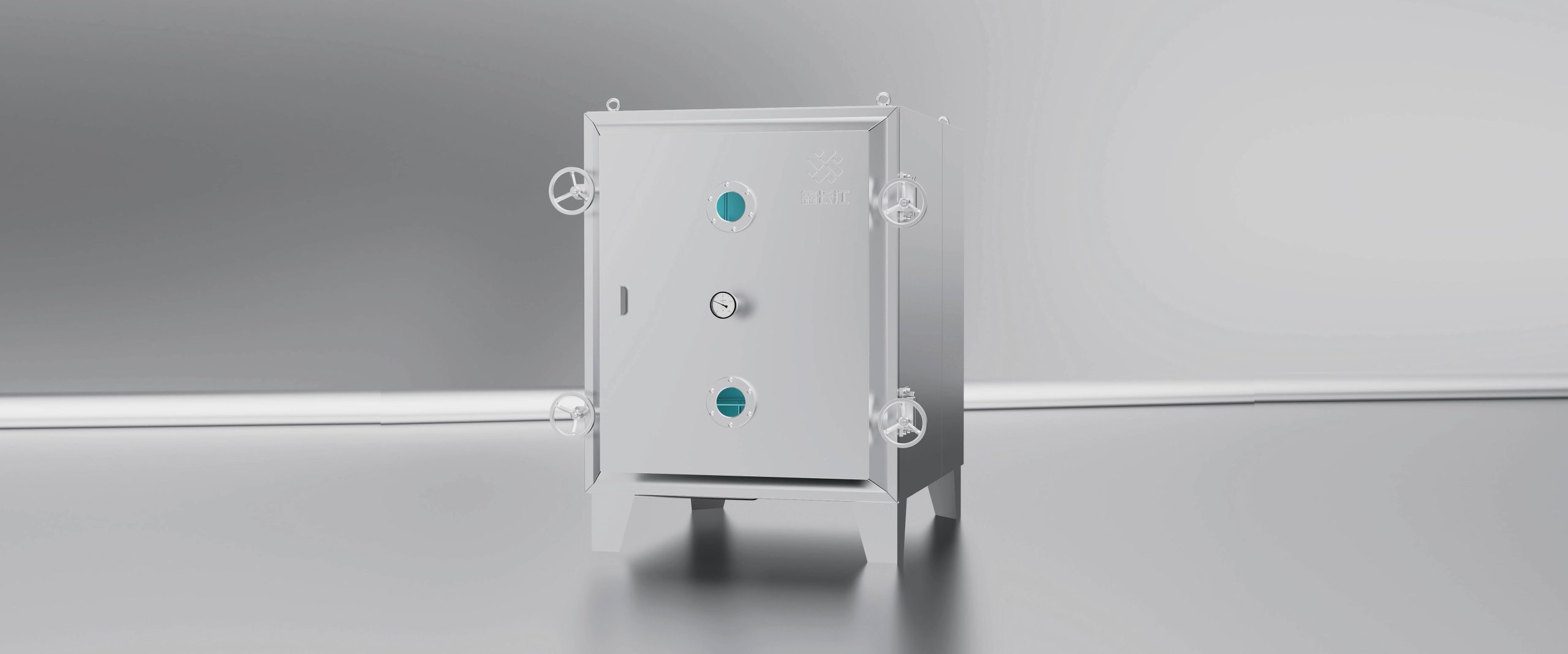
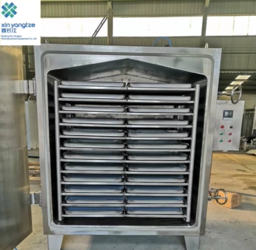
Specification and Parameter List
| Specification | FZG-60 |
| Overall Dimension
W*D*H (mm) |
1710*1620*1850 |
| Number of Rack Layers | 10 |
| Distance Between Layers (mm) | 120 |
| Baking Plate Size (mm) | 460*640*45 |
| Number of Baking Plate | 60 |
| Drying Rack Pressure (Mpa) | <0.78Mpa |
| The Temperature in the Cabinet (°C) | 35-150 |
| Vacuum in Box (Mpa) | >-0.096 |
| No-Load uniformity of hot water (℃) | ±5 |
| Equipment Weight (KG) | 2200 |
Equipment Usage
Vacuum drying boxes are widely used in research and application fields such as biochemistry, chemical pharmaceuticals, medical and health care, agricultural research, environmental protection, etc. They are used for the powder drying, baking, disinfection, and sterilization of various glass containers. Especially suitable for fast and efficient drying treatment of heat-sensitive, easily decomposable, easily oxidizable substances, and complex components.
Structure and Working Principles
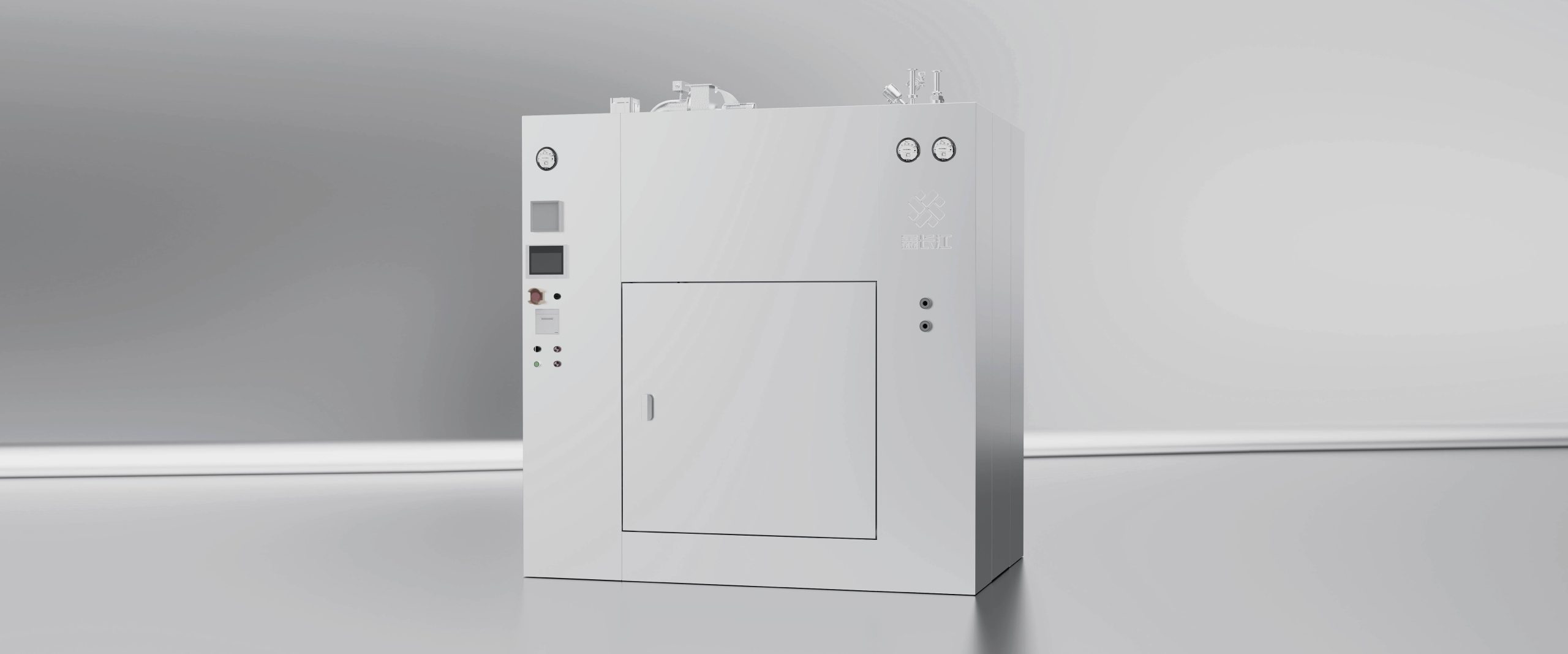
The outer shell of the electric vacuum drying oven is made of a steel plate stamped, folded, and welded into shape. The working room is made of carbon steel plate or stainless steel plate folded and welded, and insulation cotton is filled between the working room and the shell. There are sample shelves inside the working room, which are used to place various test items. The door seal is sealed with silicone rubber strips, and there is a sight glass on the box door for observation. The evacuation and inflation of the electric vacuum drying box are controlled by electromagnetic valves. The electrical box is located on the left or lower side of the box, and the front panel of the electrical box is equipped with a vacuum gauge, temperature control instrument, and control switch. The electrical box is equipped with electrical components.
The electric vacuum drying oven can maintain a certain degree of vacuum in the working room and use an intelligent digital temperature regulator to set, display, and control the temperature. This temperature regulator uses computer technology to collect and process temperature signals in the working room, which can automatically maintain a constant temperature in the working room. This temperature control system belongs to P.I.D. intelligent temperature control, reliable performance, and convenient use.
The intelligent temperature regulator has an over-temperature protection function. If the temperature inside the working room exceeds the set temperature value during equipment operation, the over-temperature protection circuit will activate and cut off the heating circuit.
What is the Difference between a Vacuum Oven and a Hot Air Circulation Oven?
There are some differences in the principles and applications between vacuum ovens and hot air circulation ovens, and there may also be some differences in the dried materials. Here are their main differences and possible impacts:
Working principle:
Vacuum oven: The vacuum oven achieves drying by establishing a negative pressure environment inside the oven and reducing pressure. Under low pressure, the moisture in the material can evaporate at lower temperatures, promoting the drying process.
Hot air circulation oven: The hot air circulation oven achieves drying by providing heating and circulating airflow. Hot air flows through the circulation system in the drying room, causing the moisture on the surface and inside of the material to evaporate and be discharged.
Drying effect:
Vacuum oven: Due to a low-pressure environment, a vacuum oven can dry at relatively low temperatures, which helps to retain the volatile components and quality characteristics of materials. In addition, vacuum ovens are more suitable for heat-sensitive materials.
Hot air circulation oven: The hot air circulation oven achieves drying by heating and circulating air. Heating at a higher temperature allows for faster evaporation of moisture, making it suitable for materials with high-temperature requirements.