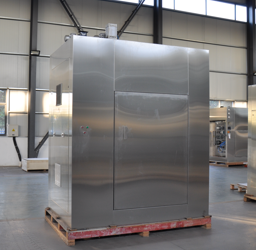
Introduction: Why a Dry Heat Sterilization Cabinet Matters
In medical manufacturing, pharmaceutical manufacturing, processing of medical devices, and many other settings, maintaining sterility and preventing the proliferation of pathogens and spores is of paramount importance. A dry heat sterilization cabinet is crucial to achieving this goal when sterilizing items that are heat-stable, moisture-sensitive, or that cannot be steam sterilized. Despite being less common than steam autoclaves, dry heat cabinets have a specific purpose that is recognized as important when selecting equipment, creating flows, validating processes, and managing compliance.
In this comprehensive guide, we explore: the dry heat sterilization cabinet’s composition; how it functions; its primary purposes; where and why it’s employed; the specifics, design, and operational issues; the validation, benefits, and limitations; and what to consider when purchasing and utilizing one in 2025.

What Is a Dry Heat Sterilization Cabinet? Definition & Basic Principle
-
Definition
A heat sterilization cabinet that is dry is a chamber that contains hot, dry air that is controlled by temperature and time. It is used to sterilize instruments, containers, or solid objects by passing them through without being affected by steam or additional moisture.
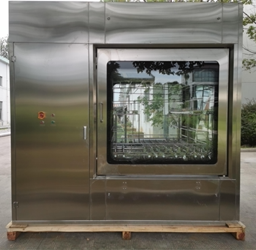
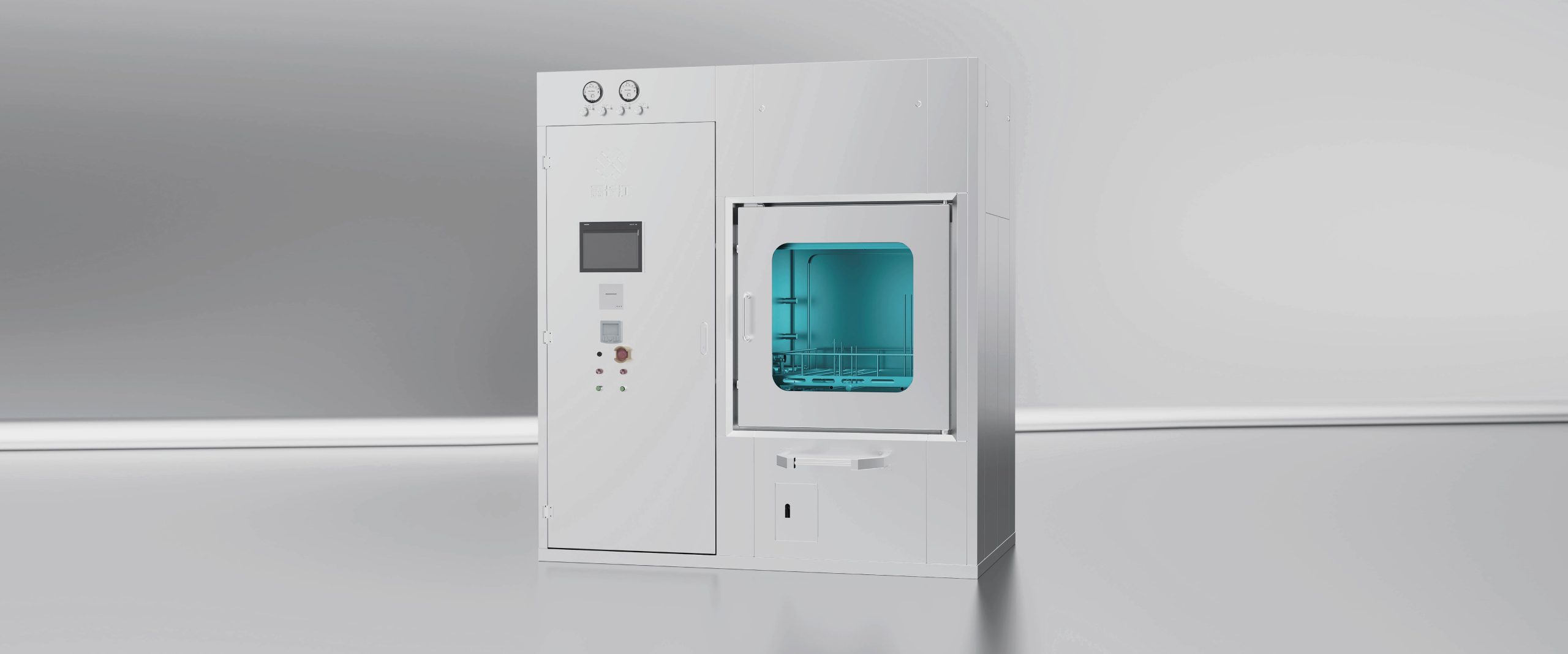
The cabinet typically has a stainless steel chamber, heating elements, forced-air or natural circulation, precise control of temperature and time, and it may have data recording or GMP interfaces for verification.
-
The Process Mechanism
Dry heat sterilization is primarily based on the conduction and convection of hot air: items in the cabinet take in the heat from the surrounding air, and this heat is gradually transferred to the material, causing the microbes to be killed by the deleterious effects of oxidative stress, protein denaturation, and dehydration.
Because the air is dry (low moisture), the procedure is slower than the moist-heat (steam) sterilization process, but it is ideal for items that cannot withstand moisture or steam. Common patterns of temperature and time are documented, including:
160 degrees Celsius for around 120 minutes; 170 degrees Celsius for around 60 minutes; higher temperatures for shorter periods of time.
In a forced-air system, temperatures higher than 180-190 degrees Celsius are common for shorter cycles.
-
The Components of the Cabinet that are essential
Common components include:
A chamber built out of 304/316L stainless steel that has insulated walls.
Heating components and a circulating fan (for natural-convection systems or forced-air systems).
Filtration (HEPA or high efficiency filter) for the incoming air or air that is reused.
The PLC is controlled by an HMI, the data is recorded by a temperature sensor, and safety devices (overheating, dehumidification) are incorporated in higher-end models.
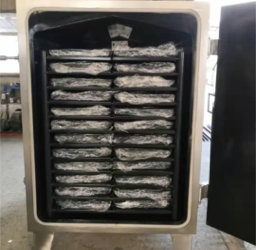
Doors and trays that are sized appropriately to allow for air circulation.
With this definition and method, we can next discuss the purpose of employing a dry heat sterilization cabinet in practice.

Core Purpose: Why Use a Dry Heat Sterilization Cabinet?
-
Sterilization of items that are resistant to heat and have a high water content
One of the primary functions of a dry heat sterilization cabinet is to sterilize items that cannot withstand steam, water, or pressure, but are still heat-resistant. For instance: glassware, surgical instruments that would wither, metal tools, ampoules or vials that would lead to condensation, and materials that must remain dry.
By using dry heat instead of steam, you avoid problems like rust, corrosion, moisture, or the degradation of sensitive materials caused by steam.
-
Deoxygenation and removal of toxins
Another important purpose, especially in the pharmaceutical or medical device industry, is to remove toxins or residues that are pyrogenic or endotoxigenic; this is accomplished by high-temperature dry air. Many dry heat cabinets are built for this purpose: they can reach temperatures of up to 180 degrees Celsius, and air is circulated to produce a thermal effect on the bacteria.
As a result, the cabinet’s mission is not only to sterilize microorganisms via steam, but also to inactivate or remove endotoxin from the cabinet’s surface; this latter function is not achieved by steam alone.
-
Maintaining Sterility in Difficult Loads
The cabinet is also intended to distribute uniform heat and avoid the need for steam to penetrate deeply, e.g., for instruments that are placed in containers, glass vials, powders, or sealed bags. The forced-air dry heat cabinet design promotes hot air flow and a uniform temperature throughout the load.
Because the objective is making sure all items in the chamber achieve the desired sterilization conditions, good flow and temperature uniformity are crucial.
-
Maintaining the Integrity of the Material and Avoiding Moisture Damage
Many times, the purpose of the dry heat cabinet is to sterilize without negatively impacting the material’s integrity. Some substances, such as powders, oils, certain plastics, and metal instruments with coatings, are susceptible to degradation in steam or require a dry environment. The dry cabinet with heat control is ideal for this type of material.
-
compliance, validation, and documentation
In industries that are regulated ( pharmaceuticals, medical devices, biotechnology), another purpose of the dry heat sterilization cabinet is to provide a documented, proven sterilization cycle with traceability (temperature records, time log, data export). Many cabinets have data recording, a GMP protocol, filters, and a controlled air flow. For instance:
“Control system for industry + HMI standard that functions as a “user management, data storage, and process management” function. The sterilization procedure can be traced back; this procedure is recorded using a dedicated data logger.
As a result, part of the objective is to regulate the process, document the procedure, and ensure regulatory compliance, not just for sterilizing objects.
Applications: Where and How the Dry Heat Sterilization Cabinet Is Used
-
Pharmaceutical Product Development
In pharmaceutical facilities, dry heat Chambers are employed to sterilize glass bottles, jars, stoppers, instruments, metal parts, and tools, all of which are intended for aseptic filling or packaging that necessitates the avoidance of moisture.
Additionally, the dry heat cabinet is pivotal in the depyrogenation of glass.
-
Medical Device and Laboratory Supplies
Laboratories that use dry heat to sterilize instruments, metal objects, glassware, pipettes, and other materials employ cabinets to do so.
In the processing of surgical instruments, instruments that are unable to withstand steam or moisture are placed in a dry heat cabinet for sterilization at a high temperature.
-
Businesses, Food and Cosmetic Establishments
Industries that require the sterilization of heat-stable or moisture-sensitive items (e.g., powders in food, oils, metal containers, cosmetic tools) also utilize dry heat sterilization cabinets.
In the food packaging or cosmetic manufacturing industry, where moisture is detrimental, dry heat cabinets are used to sterilize components or instruments in a dry environment.
-
Specialized Research or Cleanrooms
In environments with high hygienic quality (such as hospitals, aerospace, and electronics), dry heat cabinets are employed to sterilize components that must remain dry and free of debris. The capacity to create a slight increase or decrease in pressure, along with a HEPA filter that is traceable and capable of cycling, makes this cabinet ideal for these environments. For instance, the DMH-1 series features a 100-level cleanroom that is laminar.
Design & Specification Considerations for Selection in 2025
When purchasing or establishing a dry heat sterilization cabinet, understanding its purpose is crucial in order to define the appropriate specifications. Here is a comprehensive explanation of the purpose that is relevant to the subject.
-
Temperature and Time Profile
Because the objective is to sterilize/Depyrogenate, the cabinet must reach and maintain specific temperatures for a specific duration. Common ranges: 160-180 degrees Celsius for 30-120 minutes; up to 200 degrees Celsius or more for deoxygenation.
Ensure the cabinet has precise temperature control, little deviation, documented cycles, and uniformity across the chamber. Good systems have a temperature range of ±3 degrees Celsius or more uniformity.
-
Air Circulation and Temperature Uniformity
To achieve the goal of sterilizing the cabinet in a uniform fashion, the cabinet must have a consistent temperature. Mechanical ventilation systems that are forced have a faster and more uniform rate of progression than natural ventilation systems.
Design attributes include efficient filters, directional fans, wall-convection channels, and a function that maintains dryness. For instance, the DMH-series features a “channelized hot air circulation device that fan” that maintains the temperature uniform.
-
Chamber Construction and Supplies
Since the items to be sterilized may come in contact with the chamber, and since high temperatures are employed, the interior surfaces of the cabinet must be corrosion-resistant, dual-walled insulation for efficiency, and can be easily cleaned. Many cabinets employ 304 or 316L stainless steel.
Also, consider the size of the chamber, the arrangement of the tray and the spacing between the air flow, the doors (single, double) and the capacity to load, the footprint, and the design of the chamber.
-
Control, oversight, and compliance features
Because the objective is to sterilize objects via the water cycle, the cabinet should include a PLC/HMI, the recording of temperature and time, traceability, user management, alerts, and standards that are relevant to GMP and ISO (GSP, IRS).
Review attributes: thermocouple sockets, calibration documents, downloadable information, event log, password protection, and verification assistance.
-
Safety and Utility Necessities
When the goal is to sterilize items at a high temperature, safety is of paramount importance: over-temperature protection, a door interlock, a system for releasing the generated vapor, if the items have any moisture, de-humidification, insulation that is appropriate, and safety.
-
Compatibility of the material and risk assessment
Because the purpose may involve items that are resistant to heat but will degrade if mishandled, they include a compatibility review: Are the items compatible with dry heat (metal, glass, powdered substances)? Items composed of rubber, plastic, or adhesive may not be appropriate.
As a result, clarifying the objective and taking the upfront helps to avoid misconceptions or harm.
-
Maintenance, Validation, and Life Cycle expenses
Because one goal is to sterilize with oversight, maintenance, and validation, ownership becomes part of the process. Evaluate:
Calibration periods
Air filter substitutions
Life of the element heater
The impact of the cycle time on throughput (since dry heat cycles have a longer duration)
As a result, part of the objective is also to achieve operational efficiency, and the goal must take into account the time needed to cycle versus the load size.
Advantages and Limitations: Purpose vs Reality
-
Advantages
When the cabinet is employed with the proper degree of care, the benefits include:
No humidity/steam: avoids corrosion, rust, or humidity damage to objects.
Good for heat-stable and moisture-sensitive projects: glassware, metal instruments, and powders.
Simpler facility infrastructure: unlike steam autoclaves, no boiler, condensate, or pressure vessel is necessary. The article from Ares Scientific notes:
“Dry heat sterilizers … eliminate the need for steam, condensation, water, pit, drain, and structural support.”
Effective deoxygenation: high-temperature dry air can destroy toxins.
Uniform dry environment: Some assignments may enjoy being completely sterilized by steam; however, this is not the case for all assignments.
-
Limitations
However, the goal is still achieved with caveats and compromises:
Increased exposure time/ higher temperatures: Dry heat takes longer to reach sterilization, e.g., 160 °C for 2 hours versus 121 °C steam for 15-30 minutes.
High consumption of energy: Because of the extended time of heating and the high temperatures.
Not appropriate for items that are sensitive to heat or have a high water content: These items cannot be processed and are instead susceptible to melting or deformation.
Lower efficiency of penetration: This is especially true of large or dense items, where the external surface temperature is lower than the internal surface temperature, which results in a slower transfer of heat.
Disparate material properties: Some plastics, rubber, or adhesive components may break.
As a result, while the intention is obvious, users must make sure the cabinet is appropriately paired with the load and throughput requirements.
Emerging Trends & What’s New for Dry Heat Sterilization Cabinets in 2025
As the field’s evolution has progressed, the purpose of dry sterilization cabinets has evolved and now focuses on new areas:
Shorter cycle lengths and increased airflow: Enhanced forced-air designs, improved fan systems, and increased insulation that reduces the time to sterility while still maintaining dryness.
Higher temperature capacity for deoxygenation: Some cabinets have now reached 200-300 degrees Celsius for the removal of endotoxins that are supportive of more stringent regulatory requirements.
Automation and data analysis have been enhanced: with digitalization of the lab, cabinets now have full data recording, remote monitoring, qualification support, and integrated alarm systems.
Sustainability and energy efficiency: Increased insulation, energy-saving systems, enhanced airflow control, and decreased cost and environmental impact of high-temperature dry-heat processes.
Modular design and space savings: For facilities that have limited space, cabinets with a pass-through configuration, dual-door loading and unloading, and adjustable shelving.
Increasing the safety of materials and mixed load sterilization: With the increasing popularity of materials science, the number of items that can be safely dried and sterilized (including coated instruments, assemblies) is increasing.
These trends indicate that the purpose of the dry heat sterilization cabinet is not stationary, but is instead evolving in order to fulfill higher requirements of validation, material compatibility, flow, and operational efficiency.
Conclusion
Overall, the purpose of the dry heat sterilization cabinet is evident: to provide a dependable, moisture-free, high-temperature sterilization environment for items that are heat-stable, moisture-sensitive, and have full control, traceability, and compliance. Whether your goal is to sterilize vials of glass in a pharmaceutical company, instruments in a surgical room, packaging components in the food industry, or metal tools in a clean room, the alignment of the cabinet to this goal will influence the success.