Abstract:
Vacuum drier and tray (or tray-based) drying are two popular industrial drying methods that are commonly employed in fields like pharmaceuticals, chemicals, food processing, and material engineering.
According to Perry’s Chemical Engineers’ Handbook (9th Edition), drying under reduced pressure (vacuum) significantly lowers the boiling point of solvents, enabling moisture removal from heat‑sensitive materials at lower temperatures, which minimizes degradation (Perry, R.H. & Green, D.W., 2018).
Meanwhile, tray dryers, as described in Fundamentals of Pharmaceutical Drying (Wu, S., 2011), operate at atmospheric pressure with heated air circulation; this makes them ideal for bulk solids and products that are heat-tolerant (Wu, S., 2011). From the foundational references, it is apparent that vacuum dryers and tray dryers have different principles of operation, methods of control, energy consumption, and scope of application.
This article discusses the differences in greater detail, with the intention of assisting engineers, plant managers, and equipment specialists in selecting the most appropriate technology for specific manufacturing scenarios.
Introduction to Drying Technologies in Industry
Drying is a common procedure in many manufacturing processes that require the removal of moisture or solvents. The selection of a drying technology has an effect on the quality of the product, the efficiency of the process, the consumption of energy, and the cost of manufacturing. Among the most common dryers utilized in industry are vacuum dryers and tray dryers.
A vacuum dryer employs a lower pressure to facilitate the drying of heat-sensitive materials; this is particularly beneficial for these materials. Conversely, a tray dryer employs convective heat transfer with heated air to remove moisture; this is often used for more significant solids.
Despite both systems having the same ultimate goal—drying materials— their mechanisms, processes, and areas of application are vastly different.

Fundamental Operating Principles
Understanding the primary difference between a vacuum dryer and a tray dryer is necessary to have a comprehensive understanding of how each system functions.
-
Vacuum Dryer Operating Basics
A vacuum dryer operates by decreasing the pressure in the vicinity of the material to be dried. When pressure is decreased, the temperature of the product’s moisture or solvents decreases as well. This implies that evaporation is possible at lower temperatures, which is of great importance to compounds that are sensitive to temperature.
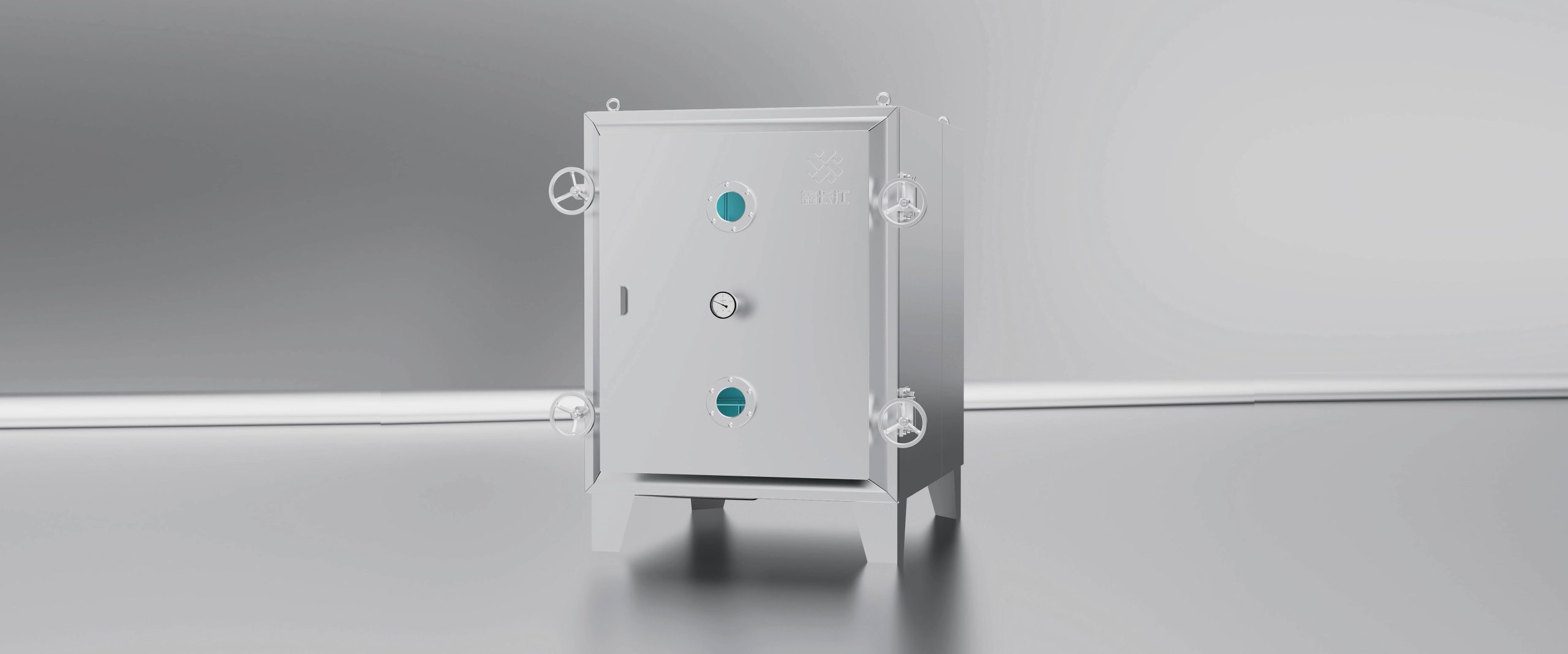
In practice, vacuum dryers are composed of a sealed chamber that is equipped with a vacuum pump and a heating mechanism that is typically through a plate or jacket that is conductive. The process of drying involves:
Sealing the chamber to prevent air from entering.
Starting the process of evacuation to lower the internal pressure.
Controlling the temperature via plates or other media that move around.
Allowing water to evaporate at a lower pressure.
The evaporated water is typically directed to a condenser, where it is gathered and condensed.
-
The principles of tray dryer operation are described in this section
A tray dryer employs atmospheric pressure to operate; the air is heated and circulated through the dryer chamber in order to evaporate the moisture from the material placed on shallow trays.
Key components include:
Trays that are fixed in place and organized in a series.
Heated air flowed in through heaters or other means of recirculation.
Convective thermal transfer from the air to the product’s surface.
Moisture that is carried away by the air flow.
Tray dryers are solely dependent on temperature and airflow to remove moisture, and the process occurs at atmospheric pressure.
Key Differences in Operating Mechanisms
The operating principles have a direct effect on the behavior of each dryer in real-world scenarios:
-
Pressure Conditions
Vacuum dryers have a lower pressure than normal, which allows for low temperatures in the drying process.
Tray dryers have a pressure differential with the air, which is heated.
-
Driving Force for the removal of moisture
Vacuum dryers utilize a lower temperature and a direct heat transfer mechanism.
Tray dryers utilize the convective movement of air and temperature differences.
-
Heat transfer methodology
Vacuum dryers typically have direct heat transfer (plates orackets).
Tray dryers take advantage of hot air flow and natural circulation.
These discrepancies have an effect on the material’s suitability, the degree of control, the energy consumed, and the overall dependability of the process.

Detailed Comparison: Vacuum Door vs. Tray Dryer
Below is a comparison table summarizing key parameters that engineers and process designers weigh when choosing between the two technologies:
| Feature / Parameter | Vacuum Drier | Tray Dryer |
| Operating Pressure | Reduced (below atmospheric) | Atmospheric |
| Drying Temperature | Low (due to depressed boiling point) | Higher (air temperature directly influences) |
| Heat Transfer | Conduction (plates, jackets) | Convection (hot air circulation) |
| Best for Heat-Sensitive Materials | ✔ High suitability | ✘ Limited |
| Drying Uniformity | ✔ High (controlled heating) | Moderate (depends on airflow) |
| Energy Consumption | Moderate to High (vacuum systems require pumps) | Moderate (heating + circulation elements) |
| Equipment Complexity | High (vacuum systems + condensers) | Lower (simpler airflow-based design) |
| Loading/Unloading Ease | Moderate to High (depends on chamber design) | High (simple tray slides) |
| Scalability | Medium (batch mode, harder to scale) | High (multiple trays, scalable racks) |
| Typical Industries | Pharma, fine chemicals, materials science | Bulk chemicals, food ingredients, minerals |
| Product Risk of Degradation | Low | High (higher temperature exposure) |
This table reflects industry consensus and engineering guidance from leading drying equipment texts and vendor specification sheets.
Heat Transfer: Conduction vs. Convection
A significant technical difference between vacuum dryers and tray dryers is the method in which they transfer heat:
In devices that lack air, the heat is typically transferred through surfaces that are heated, such as trays or plates. Because the chamber is filled with little to no air, the convective heat transfer is minimal. This leads to a uniform temperature input and lower thermal differences across the material.
In dryers that use trays, the majority of the heat is transferred to the material through convection. Heated air flows through the chamber’s drying area, transferring heat to the material’s surface. As such, the efficiency of drying is primarily dependent on the design of the airflow, the spacing of the trays, and the distribution of the air temperature.
These differences have an effect on the drying rate, efficiency of energy consumption, and the probability of having hot spots or uneven drying, particularly in thick or dense products.
Applicability to Heat‑Sensitive Products
Because decreasing pressure decreases the boiling point, vacuum dryers facilitate the removal of moisture at temperatures that would not be possible in regular atmospheric drying. This is beneficial to vacuum dryers with their capacity to accommodate products that are susceptible to thermal degradation or have a high moisture content, for example:
- Pharmaceutical active ingredients (APIs)
- Heat-sensitive polymers
- Fragrances and chemical smells
- Biomorphic materials
- Small chemical compounds
A tray dryer that operates at higher temperatures may hasten the degradation, discoloration, or loss of quality in these materials.
Batch Processing and Production Considerations
Another important factor is how each system interacts with batch processes and planning for production.
-
Vacuum Drier Considerations
Vacuum dryers are typically used for bulk operations, where small quantities of material are added, processed, and then removed. Whilebatch vacuum drying has a great degree of control, it may have a limited capacity due to:
The amount of time spent pumping in the chamber.
Cooling and a period of pressure balance.
Condense requirements
These steps introduce a period of time that is intended for scheduling production.
-
Tray dryer considerations
Also, tray dryers employ a batch-based approach, but they have simpler logistics of unloading and loading because:
Trays can be placed on top of each other and removed by hand.
Airflow is not dependent on chamber insulation.
No additional systems for collecting or storing condensate are necessary
This facilitates the integration of tray dryers into high-volume settings that involve materials that can withstand higher temperatures.

Energy Efficiency and Operating Cost
The consumption of energy is a practical issue in the drying industry.
Vacuum dryers require a pump, a condenser, and a controlled heat source, all of which can increase the demand for energy, particularly during the pull and release cycles.
Tray dryers have the greatest consumption of energy associated with them, which is through the air’s heating and fan circulation.
A comprehensive energy study often suggests that dryers with trays are more energy-efficient for heat-tolerant products, but vacuum dryers are more effective when the quality of the product and the temperature of the drying process are of paramount importance.
Product Quality and Final Attributes
The quality of the end product is significantly different between the two methods of drying.
Vacuum Drier Suppliers
Products that are dried in vacuo conditions typically have the following properties:
Preserve the color and energy of the fire.
Have a limited degree of thermal destruction
Have identical moisture levels.
exhibit high structural stability (low aggregation or caking)
These qualities are of special significance in pharmaceuticals, chemicals specializing in fine powder, and other specialized materials.
Maintenance, Operational Complexity, and Skill Requirements
The maintenance profile and complexity of operation can have a long-lasting effect on long-term costs.
Vacuum dryers require vacuum pumps, seals that are integrity checkable, condensate that is monitored, and pressure that is maintained. Operators require instruction on the control of vacuums, the safety of vacuums, and the calibration of equipment.
Tray dryers are mechanically simpler and rely on heaters, fans, and trays. Maintenance is primarily concerned with the heating elements, fans, and the integrity of the tray.
The operational simplicity of tray dryers is often attributed to them in environments that are cost-sensitive.
Safety and Regulatory Compliance
Other considerations of safety are different:
Vacuum systems must address the hazards of vacuum, the recovery of vapor, the handling of solvents, and potential overpressure situations.
Tray dryers must have control over the safety of the air, the sources of heat (for gas-based heaters), and the ventilation requirements.
In industries with highly stringent regulations (pharmaceutical, food), safety and compliance aspects are enforced through standards like cGMP and HACCP, which affect the selection of dryers and the documentation of their selection.
When to Choose a Vacuum Drier vs a Tray Dryer?
The selection is made based on a combination of products, processes, and operational goals:
-
Select a Vacuum Drier if:
The product is temperature-sensitive
Constant moisture and quality are essential
The process of oxidizing or burning must be limited.
The control of batch sizes and the integrity of products far exceeds the length of the cycle.
-
Select a Tray Dryer if:
The product is able to withstand higher temperatures.
High productivity and low complexity are goals
The efficiency of energy and the ease of use are vital
Large, insulating materials are being altered
Comparison of Key Factors
| Factor | Vacuum Drier | Tray Dryer |
| Heat Sensitivity | Excellent | Limited |
| Product Uniformity | High | Moderate |
| Throughput | Moderate | High |
| Energy Consumption | Higher (vacuum system overhead) | Moderate (air heating) |
| Complexity | High | Lower |
| Maintenance | Intensive | Moderate |
| Space Requirement | Larger (pumps + condensers) | Medium (rack system) |
| Operational Skill Required | High | Moderate |
FAQ: Vacuum Drier vs Tray Dryer
Q1: What exactly is a vacuum drier?
A vacuum dryer is a confined system that decreases the pressure around it to lower the temperature at which moisture will boil. This is particularly important for heat-sensitive materials.
Q2: How is a tray dryer different from a vacuum dryer?
A tray dryer employs atmospheric pressure to remove moisture. It does not function under lower pressure and is more effective for products that can withstand heat.
Q3: Which dryer is better for pharmaceuticals?
Vacuum dryers are typically used in the pharmaceutical industry because of their capacity to preserve the active ingredient without it being affected by the process.
Q4: Are vacuum driers more expensive to operate?
The operational costs of vacuum dryers are typically higher because of the required energy expenditure of the vacuum pump and condenser, but the increased quality of the product can often justify the cost.
Q5: Can tray dryers be used for all materials?
Tray dryers are appropriate for substances that can withstand the atmospheric temperature of drying, but they may not be appropriate for substances that decompose under heat.
Conclusion: Choosing the Right Drying Technology
Understanding the differences between a dryer with a vacuum and a tray is important for engineers, plant managers, and professionals in formulation. Both methods have their place in industrial processing, but their principles of operation, heat transfer mechanisms, products, and costs are significantly different.
A vacuum drier is superior in quality and control over the sensitive products, while a tray dryer is simple to operate and has a variety of advantages for the robust materials. The most effective choice is based on the product’s attributes, regulations, and operational goals.
By integrating the dryer’s selection in both physical principles and practical concerns, facilities can maximize the quality of their products, energy consumption, and process dependability.