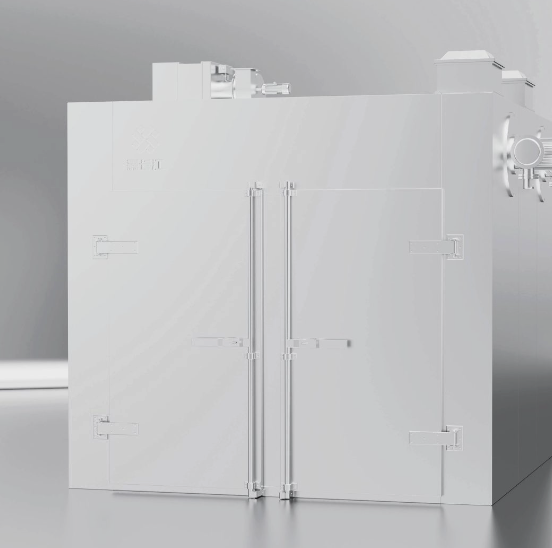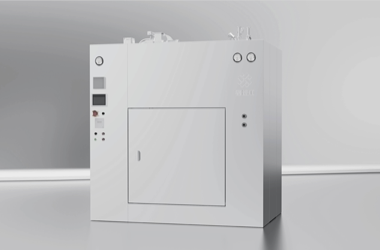
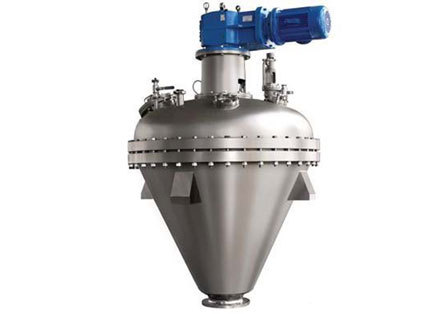
Overview of Single Cone Mixed Dryer
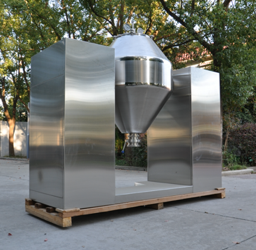
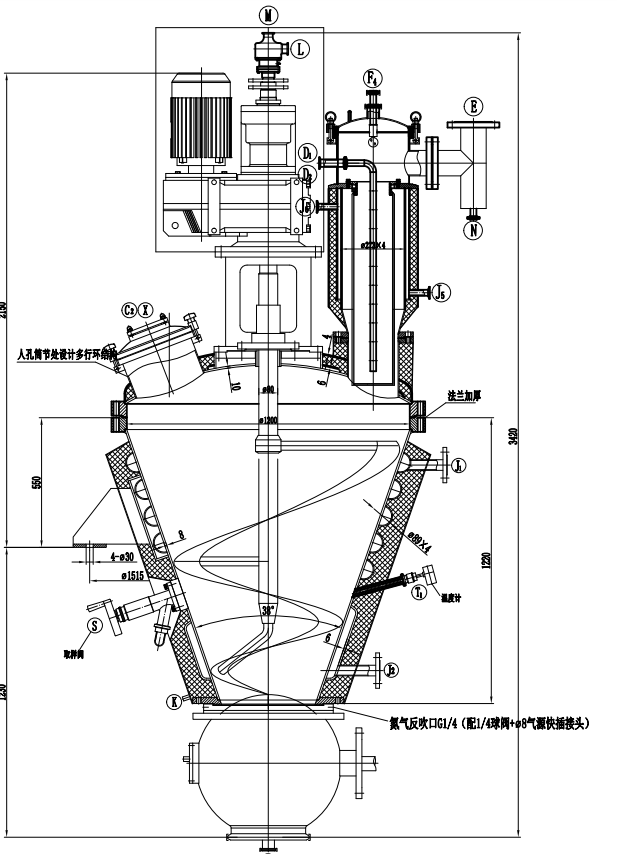
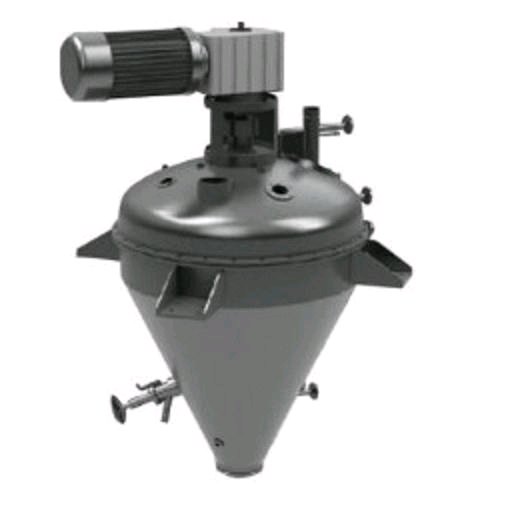
The single cone high-efficiency mixed dryer is an efficient, multi-functional, fully enclosed vertical vacuum drying equipment that integrates drying, crushing, vacuum distillation, and powder mixing. Its drying efficiency is 3-5 times that of a double-cone rotary vacuum dryer of the same specifications.
The single cone mixed dryer is mainly used for powder drying in industries such as pharmaceuticals, chemicals, pesticides, and food. It can achieve continuous operation with a closed process and is a popular drying equipment in the aforementioned industries.
A single cone vacuum dryer is a rotary tank with a single cone shape. Under vacuum, steam or hot water is introduced into the jacket for heating, and the heat comes into contact with wet materials through the inner wall of the tank. The water vapor evaporated after absorbing heat from wet materials. It is pumped out through the vacuum exhaust pipe through a vacuum pump. Due to the vacuum state inside the tank, and the rotation of the tank, which causes the material to constantly move up and down, inside and outside, the drying speed of the material is accelerated, the drying efficiency is improved, and the goal of uniform drying is achieved.
The drying speed is fast, usually only a few seconds to a dozen seconds, with the characteristic of instant drying.
The temperature of the droplets during the drying process is relatively low, making it particularly suitable for drying thermosensitive materials, which can maintain the color, aroma, and taste of the materials. To prevent wall sticking in the drying tower, this device is equipped with a special structure, effectively eliminating the phenomenon of product wall sticking.
The unique finished product air supply system separates the dried finished product from the hot and humid air inside the system promptly, avoiding the possibility of moisture absorption or agglomeration of the dried finished product.
Advantages of Single Cone Mixed Dryer
All surfaces in contact with materials are heated, such as tanks, heads, mixers, and dust collectors, which can greatly improve drying efficiency.
The tank body adopts half-tube heating, ensuring the closed-circuit flow of the heating medium without short circuits, improving heat exchange efficiency, and shortening drying time.
The mixing shaft and mixing blade are also designed with a single-channel heating channel, avoiding short circuits in the heating medium, uniform heating, high heat transfer efficiency, and short drying times.
The sealing between the mixing shaft and the tank body adopts double-end face-packing sealing, which is reliable and easy to maintain. The packing box can be filled with nitrogen for protection, avoiding contact between materials and external air, thereby preventing material oxidation and deterioration.
The mixing shaft is equipped with a wear-resistant shaft sleeve at the installation position of the packing box, which improves the sealing performance and service life of the packing box and is very convenient for maintenance.
The connection between the tank body and the drive and seal is processed as a whole after welding, ensuring the coaxiality between the drive device and the tank body, ensuring stable equipment operation, good sealing, and long service life.
At the bottom of the hemispherical tank, the stirred bottom matches the bottom of the tank, greatly reducing the height of the dryer, avoiding dead corners, improving drying and mixing efficiency, and ensuring clean and residue-free discharge.
Working Principle of Single Cone Mixed Dryer
This machine is equipped with an explosion-proof motor, which is driven by a parallel helical gear reducer to rotate a single screw belt mixer. The animal material is rotated along the conical cylinder and lifted from bottom to top. After reaching the top point, the material automatically flows to the center of the vortex and returns to the bottom of the conical cylinder through gravity and inertia. The entire process forces the material to be heated inside the conical cylinder, with relative convection and mixing. The heat diffuses among the materials, causing them to undergo an all-around irregular reciprocating motion. This completes high-frequency heat transfer and exchange of materials with a single spiral belt and the surface of the cylinder wall, achieving the effect of heating and drying in a short period.