Abstract:
Drying is one of the most important unit operations in chemical, pharmaceutical, food, and material processing industries. According to Perry’s Chemical Engineers’ Handbook and Mujumdar’s Handbook of Industrial Drying, the type of equipment used for drying has a significant impact on the product’s stability, energy consumption, and overall production efficiency.
Among the most common batch dryers are the vacuum dryer and the tray dryer, both of which are intended to remove moisture from solids, but they operate under different principles of physics.
A vacuum dryer lowers the pressure to a low enough level to allow the drying of solvents at a lower temperature, while a tray dryer typically operates at atmospheric pressure using hot air for circulation.
This article discusses the principles behind both types of dryers, the structural differences between them, the performance differences between them, the cost implications of each, and the applications that they have in the industry.
Introduction: Why Comparing the Vacuum Dryer and Tray Dryer Matters?
In industrial processes that require drying, the equipment selection has a direct impact on the quality of the product, the length of the production cycle, and the cost of operation. While both vacuum dryers and tray dryers are part of a batch-based drying system, their different thermodynamic principles and capabilities are significant.
The vacuum dryer is particularly beneficial in industries that require processes that are temperature-sensitive. Reducing the pressure in the system, it allows moisture or solvents to evaporate at lower temperatures. Conversely, the tray dryer employs air circulation at atmospheric pressure that is heated, making it ideal for materials that can withstand temperatures that are moderate to high.
Understanding the distinction between these two methods of drying is not simply a comparison of academic merits. It determines whether or not a pharmaceutical ingredient retains its effectiveness, whether or not a chemical intermediate is maintained in its structure, and whether or not a food product is preserved with its nutritional value.

What Is a Vacuum Dryer?
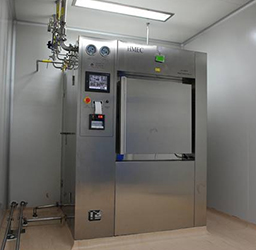
A vacuum dryer is a sealed system that extracts moisture by decreasing the internal pressure, which lowers the temperature of water or other solvents. In low-pressure conditions, liquids evaporate at a lower temperature than in atmospheric conditions.
This principle is derived from basic thermodynamics: the temperature of a liquid is lower when the pressure is lower. For instance, water that typically boils at 100 degrees Celsius in the atmosphere may now boil at 40-60 degrees Celsius in the vacuum.
Vacuum dryers are typically composed of:
- A chamber that is sealed
- Heating tables or shelves
- Vacuum generators
- Condensers that recover solvent
- Temperature and pressure regulation systems
These systems are popular in the pharmaceutical industry, chemical compounds with a fine powdered nature, and specialty materials processing that involves a high degree of product sensitivity.
What Is a Tray Dryer?
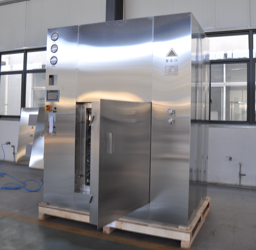
A tray dryer, also called a hot air oven dryer, is a system that employs heated air that is circulated across trays that are filled with wet material. The system is dependent on atmospheric pressure.
In a dryer with a tray:
- The damp material is uniformly laid across the trays.
- Heated air flows across the trays.
- Moisture is lost due to the heat of evaporation.
- Moist air is vented through openings.
Tray dryers are simpler and generally more cost-effective than vacuum dryers. They’re typically employed in the food industry, the herb industry, and large-scale chemical manufacturing that doesn’t require thermal sensitivity.
Fundamental Difference: Pressure vs Atmospheric Drying
The most significant difference between a vacuum dryer and a tray dryer lies in operating pressure.
| Parameter | Vacuum Dryer | Tray Dryer |
| Operating Pressure | Below atmospheric (vacuum) | Atmospheric |
| Boiling Point Control | Lowered by pressure reduction | Fixed by atmospheric conditions |
| Suitable for Heat-Sensitive Materials | Yes | Limited |
| Oxygen Exposure | Minimal | Present |
| Energy Efficiency (for solvent recovery) | High in specific cases | Moderate |
Vacuum dryers modify thermodynamic conditions to achieve drying, whereas tray dryers rely solely on temperature and airflow.
Drying Mechanism Comparison
- Vacuum Drying Mechanism
The vacuum dryer has a combination of pressure reduction and conductive heating that results in evaporation. The substance is heated via insulated walls or heated supports. As the pressure decreases, the vapor pressure difference between the material’s surface and the chamber increases, which facilitates the removal of moisture.
Because the oxygen levels are low, materials that are sensitive to oxidation benefit from being dried by vacuuming. Additionally, solvent recovery systems can collect the vapor that is evaporated for reuse.
- Tray Dryer’s Mechanism
The tray dryer employs a convective method of heat transfer. Heated air flows over the material’s surface, which increases the rate of evaporation. Moisture is removed from the air by the velocity of the airflow, the temperature difference, and the humidity differential.
Vacuum dryers, on the other hand, don’t expose the material to ambient oxygen; this may harm compounds that are sensitive.
Heat Transfer and Efficiency Differences
Different mechanisms of heat transfer have a significant difference:
- Vacuum dryer: primarily conduction
- Tray dryer: Convection is the primary method
Conduction heating in vacuum systems promotes a more even temperature distribution for heavier materials. However, vacuum systems require extra energy to maintain a pressure decrease.
Tray dryers are simpler mechanically, but may need to spend more time drying, especially for thick or dense materials.

Product Quality Considerations
In the pharmaceutical and chemical industries, the method of drying affects the crystal structure, chemical stability, and bioavailability.
Vacuum drying preserves:
- Heat-sensitive substances
- Pharmaceutical active ingredients (APIs)
- High value-specialty chemicals
Tray drying may lead to:
- Temperature degradation
- Solid surface hardening (case hardening)
- Uneven moisture distribution
Industrial Application Comparison
| Industry | Preferred Dryer Type | Reason |
| Pharmaceuticals | Vacuum dryer | Protects heat-sensitive APIs |
| Food processing | Tray dryer (often) | Cost-effective bulk drying |
| Fine chemicals | Vacuum dryer | Solvent recovery & purity |
| Herbal products | Tray dryer | Moderate heat tolerance |
| Specialty polymers | Vacuum dryer | Prevent oxidation |
Cost and Investment Analysis
Vacuum dryers are more expensive to run because of their higher initial cost.
- Vacuum generators
- sealed chambers
- Condensation systems
- Elaborate controls
Tray dryers have requirements:
- Heating components
- Fans
- Insulated room
The costs of operation are different for different materials and processes. For products that have a high value, vacuum dryers often attribute their cost to increased productivity and quality.
Maintenance and Operational Complexity
Vacuum dryers require:
- Seal inspection
- Vacuum pump maintenance
- Condenser cleaning
- Pressure monitoring
Tray dryers require:
- Fan maintenance
- Heater inspection
- Airflow calibration
Vacuum systems are more technically demanding but provide greater process control.
Safety Considerations
Vacuum dryers diminish the exposure to oxygen, which decreases the risk of fire in processes that contain solvents. However, failure to regulate the vacuum properly can lead to stress on the chamber’s walls.
Tray dryers have a pressure of atmospheric origin, but they may involve a higher risk of fire when dealing with flammable solvents without proper ventilation.
Environmental and Energy Impact
Vacuum dryers can have systems that recover solvents, which diminishes the environmental impact. Manytray dryers emit moisture and vapor directly into the exhaust system.
The efficiency of energy is primarily dependent on the process’s scale and the product’s type. In high-value solvent recovery processes, dryers that are powered by vacuums are more environmentally sustainable.
When Should You Choose a Vacuum Dryer?
A vacuum dryer reduces the humidity below a certain threshold, which lowers the temperature of solvents and water. This facilitates the drying of materials at lower temperatures while minimizing thermal degradation and oxidation.
- Heat-Sensitive Materials
Vacuum drying is most effective for:
- APIs (active pharmaceutical ingredients)
- Small chemicals
- Polymers
- Biomorphic materials
Lower the temperature of the drying process to preserve the molecular structure and effectiveness of the product.
- Products that are sensitive to oxygen or that can be oxidized
In low-pressure conditions:
- The levels of oxygen are reduced
- The probability of oxidation decreases.
- Product stability is enhanced
This is of paramount importance to the pharmaceutical and specialized chemical industries.
- When Extra Solvent Is Necessary
Vacuum systems can combine:
- Condensers
- Recovering solvent units
This causes them to be appropriate for chemical processing based on solvents.
- For more stringent product purity requirements
Vacuum drying reduces the amount of time:
- The risk of contamination
- Airborne particle exposure
- Untrained oxidation
Perfect for environments that follow GMP guidelines.
- For faster dehydration at lower temperatures
Because the boiling point is reduced by the vacuum:
- Drying is facilitated by lower temperatures
- Efficiency in terms of energy may be enhanced for specific substances
- The decrease in product size or degradation is minimized
Side-by-Side Decision Factors
| Factor | Tray Dryer | Vacuum Dryer |
| Operating Pressure | Atmospheric | Reduced pressure |
| Suitable for Heat-Sensitive Materials | Limited | Excellent |
| Equipment Cost | Lower | Higher |
| Maintenance Complexity | Simple | Moderate to High |
| Drying Temperature | Higher | Lower |
| Oxidation Control | Limited | Strong |
| Solvent Recovery | No | Yes |
| Product Purity Control | Moderate | High |
Practical Decision Framework
Choose a Tray Dryer if:
- Your material is thermally stable
- Budget constraints are significant
- Production scale is moderate
- Simplicity and ease of maintenance are priorities
Choose a Vacuum Dryer if:
- Your material is heat-sensitive
- Product quality is highly critical
- Oxidation must be minimized
- Solvent recovery is required
- You operate in pharmaceutical or high-purity environments
When Is a Tray Dryer the Better Option?
A tray dryer (also called a hot air circulation dryer) employs the convective method of heat transfer: heated air flows over materials placed on trays to evaporate the moisture in the air at atmospheric pressure.
- Heat-Stable Materials
Tray dryers are beneficial for materials that are dried:
- Don’t respond to the oxidizing agents
- Can adapt to higher temperatures
- Don’t underestimate the effects of the weather
Common examples:
- Food slices (vegetables, fruits)
- Chemicals and other substances
- Porous ceramic pellets
Over-the-counter pharmaceuticals (not sensitive to heat)
- When Efficiency in Cost Is the Number One Priority
Tray dryers typically:
- Lower the cost of capital
- Require less frequent updates
- Provide a lower degree of operational difficulty
For productions that are small to medium-sized, tray dryers have a beneficial drying effect.
- For thebatching of goods with variable throughput
Tray dryers assist:
- Multiple products are drying in separate containers
- Varied batch sizes
- Easy operations for loading and unloading
They’re appropriate for operations that have a lot of product changes.
- When High Vacuum Is Not Necessary
If the product is not obligated to:
- Low-boiling-point evaporation
- environments that lack oxygen
- Solvent recovery
Next, a dryer with a tray is typically necessary.
- For those who have a lower technical complexity
Tray dryers are simpler mechanically. They:
- Don’t require a pump for evacuation.
- Have less stringent requirements for sealing.
- Lower the probability of a failed vacuum.
This facilitates their operation in facilities that have limited technical expertise.
Technical Summary Comparison
| Feature | Vacuum Dryer | Tray Dryer |
| Pressure Environment | Reduced pressure | Atmospheric |
| Heat Transfer Mode | Conduction | Convection |
| Drying Temperature | Lower | Higher |
| Oxidation Risk | Low | Moderate |
| Equipment Cost | Higher | Lower |
| Process Control | Advanced | Basic |
Frequently Asked Questions (FAQ)
Q1: What is the primary benefit of a vacuum dryer?
The primary benefit of a vacuum dryer is its capacity to dry heat-sensitive materials at lower temperatures by decreasing pressure.
Q2: Is a dryer with a vacuum faster than a regular dryer?
The composition is dependent on the substance. For materials that are sensitive to heat, the process of vacuum drying is more effective. For larger amounts of material, tray dryers may have a higher productivity.
Q3: Can tray dryers be employed in pharmaceuticals?
Yes, but typically compounds that are stable in the atmosphere have a tendency to dry out.
Q4: Is the efficiency of a vacuum dryer greater?
In instances where solvent is needed orrez and sensitive materials, vacuum dryers have a greater overall effectiveness.
Q5: What kind of dryer is more difficult to maintain?
Tray dryers are simpler to maintain because of their simpler mechanical systems.
Conclusion
The distinction between a vacuum dryer and a tray dryer is primarily based on their environmental operating mechanism, heat transfer mechanisms, and the capacity to withstand sensitive materials.
While tray dryers have the advantage of being simple and cost-effective, vacuum dryers have a more advanced control, lower temperatures that are used for drying, and a more extensive preservation of the product.
Selecting the appropriate drying equipment is dependent on the evaluation of the product’s sensitivity, production volume, financial capacity, and quality goals.
In high-paying industries like pharmaceuticals and chemicals that are fine, a dryer with a vacuum is often essential. In processing environments that have a high volume, the tray dryer continues to be a popular and budget-friendly option.